Choosing the right corporate venue shapes how guests experience an event. A polished room alone is not enough. The great corporate event venue checklist Ontario 2026 should cover accessibility, acoustics, audiovisual technology, catering, staffing, capacity, parking, layout, and contingency planning. When planners understand how to evaluate event venue Ontario options, they can avoid surprises and create a successful experience that feels smooth from arrival to closing remarks.
Location and Guest Experience
A strong venue should be easy to reach, clearly signed, and practical for the audience. Consider parking, public transportation, hotels, accessibility, loading access, coat storage, washrooms, and registration space. Corporate venue must-have features 2026 also include dependable Wi-Fi, comfortable temperature control, staff, and flexible room layouts.
Think about the guest journey. Where will attendees check in? Can networking happen without blocking entrances? Are breakout rooms nearby? What makes an event venue excellent in Ontario is often the ability to support these details without forcing improvisation.
Acoustics and AV Capabilities
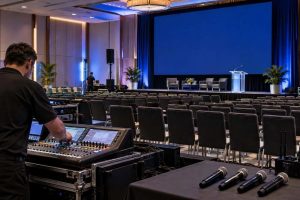
Poor sound can ruin an otherwise impressive event. When using a great corporate event venue checklist Ontario 2026, test the room from different points. Listen for echo, HVAC noise, sound leakage, and dead zones. Ask whether it provides microphones, speakers, projectors, screens, lighting, presentation clickers, adapters, and technical support.
Knowing how to evaluate event venue Ontario AV capabilities also means asking about failure procedures. Confirm backup microphones, spare cables, internet redundancy, power availability, and whether an on-site technician will remain on-site.
Corporate venue must-have features 2026 should support hybrid meetings too. For remote speakers or livestreaming, test upload speed, camera placement, sound feeds, and conferencing compatibility before signing the contract.
Catering Flexibility
Food affects timing, guest satisfaction, and budget. What makes an event venue excellent in Ontario is not simply having a menu; it is having catering options that fit the event. Ask about plated meals, buffets, breaks, receptions, dietary restrictions, halal, vegetarian, vegan, allergy-sensitive preparation, beverages, and service timing.
Find out whether outside caterers are permitted and whether additional kitchen, staffing, corkage, rental, or cleaning charges apply. If alcohol will be served, confirm licensing responsibilities and any permit requirements beforehand.
Capacity and Layout
Never accept a capacity number without context. The same ballroom may hold different numbers depending on whether the setup uses theatre seating, banquet tables, classroom rows, booths, staging, or a dance floor. Ontario’s Fire Code requires assembly occupancy to remain within the permitted occupant load, with limits influenced by the intended use and available egress.
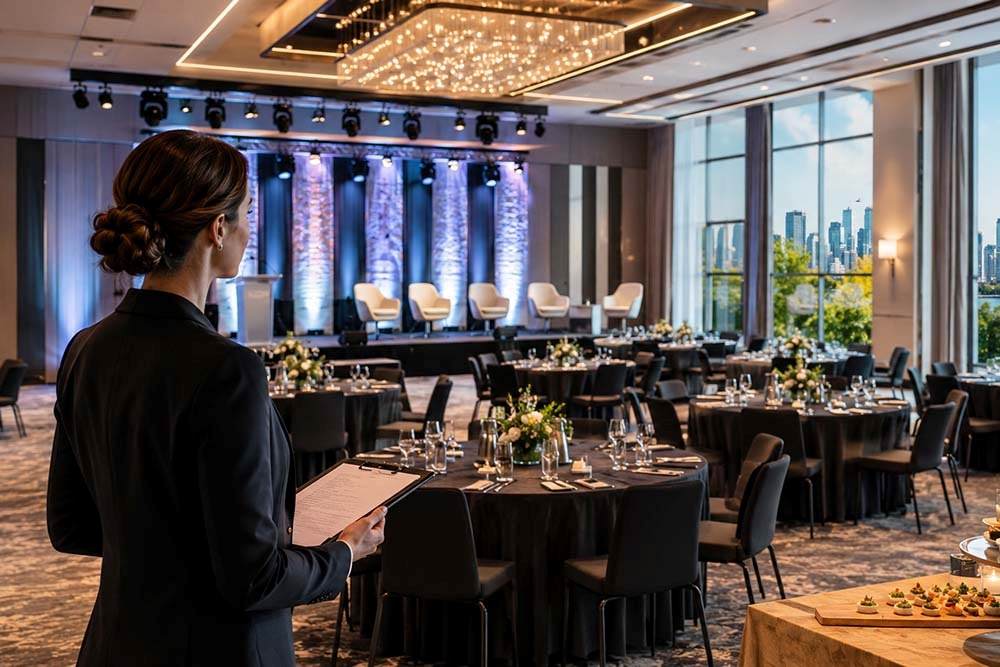
A practical great corporate event venue checklist Ontario 2026 should request the room capacity and floor plans for your preferred setup. Ask the venue to show where stages, AV consoles, food stations, sponsor booths, and accessibility routes will sit.
This is central to how to evaluate event venue Ontario claims. A room advertised for 300 guests may feel uncomfortable once tables, production equipment, and circulation space are added.
Contracts, Staffing and Hidden Costs
Corporate venue must-have features 2026 extend beyond the physical room. Review the contract for setup time, teardown deadlines, overtime charges, security, insurance requirements, cancellation terms, service fees, taxes, rentals, parking, staffing, and minimum food spending.
Ask who will be your contact before and during the event. What makes an event venue excellent in Ontario is often responsive management. A venue that answers operational questions clearly before booking is more likely to handle last-minute changes effectively.
Before paying a deposit, conduct a walkthrough with your agenda in hand. Follow the path speakers, vendors, executives, and attendees will take. Testing the experience is far more useful than judging a venue from photographs.
FAQ’s
Q1. What features should every corporate event venue have in Ontario?
A: A strong corporate venue should offer accessible facilities, reliable Wi-Fi, appropriate AV equipment, clear capacity information, flexible layouts, catering options, professional staffing, adequate washrooms, parking or transportation access, and practical setup areas. Backup plans for technology and unexpected operational issues are also valuable.
Q2. How do I assess acoustics and AV capabilities at a venue?
A: Visit the room while possible, test microphones and speakers, check sightlines, listen for echo or background noise, and confirm available connections. Ask about technical staff, internet performance, backup equipment, power access, and support for hybrid presentations or livestreaming.
Q3. What catering flexibility should a corporate venue offer?
A: A good venue should accommodate dietary restrictions, different service formats, event schedules, beverage requirements, and guest counts. Ask whether outside catering is allowed, how allergies are handled, and which staffing, rental, corkage, minimum-spend, or service charges apply.
Q4. How do I verify a corporate venue’s capacity claims?
A: Request the official occupant load and a floor plan based on your exact seating style. Confirm that staging, tables, AV equipment, booths, aisles, exits, and accessibility routes are included. Capacity should reflect the real event layout, not an empty-room maximum.